

Akbash Dog
Group: Guardian Dog Group
Origin: Turkey
Height:
- – Males: 28 to 31 inches (71 to 79 cm);
– Females: 27 to 29 inches (69 to 74 cm)
Weight:
- – Males: 90 to 130 lbs (41 to 59 Kg);
– Females: 75 to 100 lbs (34 to 45 Kg)
CLICK HERE to View Breeder Listings
Breed Profile
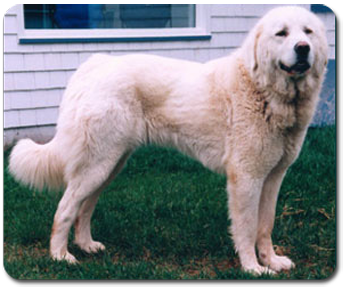
The Akbash Dog is an ancient breed originating in Turkey where he was used to guard livestock. It is believed that his ancestry was influenced by both Sighthound and Mastiff breeds. Though a large dog, he moves with surprising speed and agility, able to run at great speed with a gazelle-like grace. He also has an acute sense of sight and hearing.
The Akbash Dog learns quickly; however, he can be easily bored with repetitive obedience training exercises so may not be the ideal candidate for Obedience competition. As a livestock guardian, the Akbash is an independent thinker and can be dominant toward other dogs. He is naturally calm but can display ferocity when protecting property or livestock. His aloofness toward strangers, loyalty, affection, complete dedication and devotion to his family and any animals in his charge make him the ideal guard dog.
Another characteristic of the Akbash Dog is, both males and females, have a strong maternal instinct, especially toward small and young animals and children. The Akbash will bond to whatever he is raised with. This is why it is always suggested that the working Akbash pup be placed with the livestock he will eventually be expected to protect.
There are two major coat types with variations in between: A medium, smooth coat of one to three inches in length; and a longer coat that may grow to six to eight inches. Both types have a coarse outer coat that is non-matting, and a softer, shorter undercoat.
Health Issues
Although the Akbash Dog is generally a healthy breed, the following conditions can occur:
- Hip Dysplasia
- Epilepsy
- Ruptured Cruciate Ligament Injuries
- Hypothyroidism
- Umbilical Hernias,
- Cardiomyopathy
- Osteosarcoma, Lymphoma and other cancers
- Kidney Failure
- Gastric Torsion (Bloat) — As with any deep-chested dog, the occurrence of Bloat or Gastric Torsion is a real possibility in the Akbash Dog. If you are not familiar with this condition, it is absolutely necessary to learn about it and know the symptoms — This is a real emergency and a life threatening condition that requires immediate Veterinary attention. See First Aid for Bloat for an article describing some of the things you can do if you are faced with this situation.
While some of these conditions may be caused by environmental and/or nutritional factors, others can be of a hereditary nature. If you are considering the adoption of a Akbash puppy, or any breed, it is very important to be selective in choosing a responsible and reputable breeder. Ensure that the prospective puppy’s parents have all health clearances. Breeding of any dog should not be done until after they have been proven to be free of evidence of significant hereditary diseases. (For more information on selecting a breeder, see the articles on the General Information page.)
Additional Health Resources:
- Health and Nutrition — This section of the Canada’s Guide to Dogs website includes information on several health and nutrition related issues.
- Canine Health Information Center (CHIC) — Providing a source of health information for owners, breeders, and scientists that will assist in breeding healthy dogs. CHIC is a centralized canine health database jointly sponsored by the AKC/Canine Health Foundation (AKC/CHF) and the Orthopedic Foundation for Animals (OFA).
- AKC Canine Health Foundation — Working towards developing scientific advances in canine health.
- Orthopedic Foundation for Animals (OFA)
- Ontario Veterinary College (OVC)
- University of Pennsylvania Hip Improvement Program (PennHip)
- HealthGene — HealthGene Corporation is the leading provider of veterinary DNA diagnostic services in Canada.
- Labgenvet — Laboratory of Veterinary Genetics is a Canadian diagnostic laboratory that offers a comprehensive service of DNA tests for veterinary genetic diseases.
Breed Standards
- U.K.C. Breed Standard
- Akbash Dogs International Breed Standard
– Akbash Dogs International acts as a registrar for Akbash Dogs around the world.
Note: The Akbash Dog breed is not recognized by the Canadian Kennel Club (CKC) or the American Kennel Club (AKC). However, the breed may be recognized by other registries not indicated here.
Grooming Information
- Grooming — This section of the Canada’s Guide to Dogs website includes tips, articles and information covering all aspects of dog grooming along with a listing of Groomers from across Canada.
Training Resources
- Starting the LGD Pup by Catherine de la Cruz
- Training — For training information, see this growing section of the Canada’s Guide to Dogs website for tips, articles, as well as listings of training centres across Canada.
Additional Information
- Working Livestock Guardian Dogs (LGD) — What is their Job?
- Livestock Guardian Dogs Factsheet
- Clubs, Sports & Activities — For information on the many sports and activities you can get involved in with your dog.
- Working Dogs — The Working Dogs section of the Canada’s Guide to Dogs website provides information and listings of organizations that are involved in various dog jobs, such as Guide Dogs, Therapy Dogs, Police Dogs, Protection Dogs, and much more.
Breed Listing

Quick Links
Get In Touch
- Email: canadasguidetodogs@gmail.com
- Visit us on Facebook: www.facebook.com/CanadasGuideToDogs
— CanadasGuideToDogs.com is an Amazon Associate as well as a participant in various affiliate programs, as such fees are earned from qualifying purchases.