

Bergamasco
Group: Herding Group
Origin: Italy
Height:
- – Males: Ideal height at the withers is 60 cm;
– Females: Ideal height at the withers is 56 cm.
– A tolerance of 2 cm more or less is acceptable.
Weight:
- – Males: 32-38 Kg;
– Females: 26-32 Kg
Other Names: Cane da Pastore Bergamasco; Italian Alpine Sheepdog; Alpine Sheepdog; and Northern Italian Sheepdog
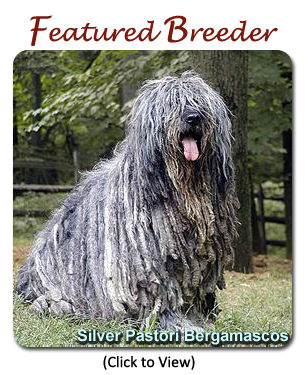
CLICK HERE to View Breeder Listings
Breed Profile
The Bergamasco is a medium size, muscular, and well proportioned herding dog. A unique and striking characteristic of the breed is its coat which is made of three types of hair combined to form dense, flat, felt-like mats that continue to grow throughout the dog’s life. The coat, although unusual in appearance, is actually a very efficient protection system — The mats allow the dog to tolerate extended periods of cold and wet weather as well as serving as protection from insect bites and predators.
The Bergamasco was bred with the purpose of guiding and guarding a herd and, as such, as developed into an excellent guard and companion dog that bonds closely to his owner and family. Always vigilant and focused, the Bergamasco is said to have very strong protective instincts, is very intelligent, courageous but not aggressive, quiet yet alert to his surroundings, patient and eager to please.
Easily trained and always willing to please, the Bergamasco however does not enjoy carrying out useless tasks. With their well balanced temperament and intelligence, they can be trained for many functions, including obedience, agility, herding and guarding sheep, and police/rescue work. The breed is strong and rugged, able to endure all types of weather and is an excellent companion for those who enjoy an active lifestyle.
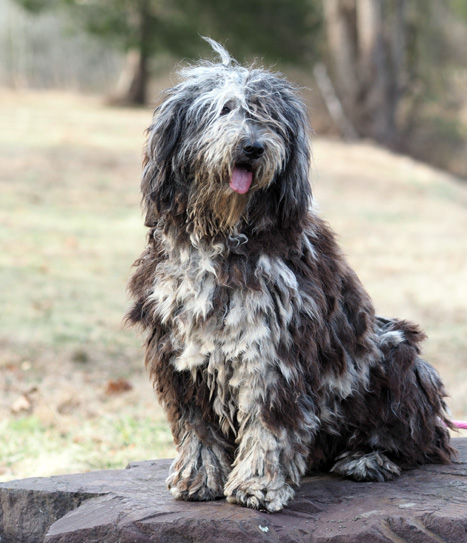
Photo by: Silver Pastori Bergamascos
A Brief History of the Bergamasco
This ancient breed is said to be one of several breeds of sheepdogs that traces its origins back to Persia. Eventually travelling with their nomadic shepherds, the dogs were brought to the Italian Alps and became known as the Bergamasco. These dogs worked closely with their shepherds, protecting and guiding the flocks. Working one-on-one with the shepherds, the dogs were trained to be problem-solvers, able to identify what needed to be done and figuring out how to go about doing it without being given exact direction from the shepherds. As a result, the Bergamasco developed into a highly intelligent breed, combining the desire to please with the ability to think for itself.
After World War II, when the need for shepherding dogs declined, the breed nearly faced extinction. The breed as he is known today, can be traced back to the farm of Piero Rota in the Bergamo hills of Italy, where the Valle Imagna kennel officially began breeding the Bergamasco. Shortly after this time, kennels dedicated to the survival of the breed were established; they included Valle Scrivia (today one of the oldest breeding kennels in Italy); dell Albera ; dell Idro; and Braham Kennel to name a few. They began the task of saving the breed and, through more than 40 years of careful breeding, many lines of champion dogs were developed. In time, interest in the breed emerged across Europe and the first Bergamascos were imported to the United States in the 1990s. Today, the breed is still involved in herding, but is also seen in therapy work, competing in agility and other dog sports.
References/Further Reading on the History of the Breed:
- Italian Kennel Club (ENCI)
- Bergamasco History — International Bergamasco Sheepdog Association
- History of the Bergamasco
Health Issues
The Bergamasco breed is generally very healthy. However, as with all breeds, the Bergamasco may be susceptible to some health concerns including hereditary disorders. If you are considering the adoption of a Bergamasco puppy, or any breed, it is very important to be selective in choosing a responsible and reputable breeder. Ensure that the prospective puppy’s parents have all recommended health clearances. Breeding of any dog should not be done until after they have been proven to be free of evidence of significant hereditary diseases. (For more information on selecting a breeder, see the articles on the General Information page.)
Additional Health Resources:
- Canine Health Information Center (CHIC) — CHIC is a centralized canine health database jointly sponsored by the AKC/Canine Health Foundation (AKC/CHF) and the Orthopedic Foundation for Animals (OFA).
- Health and Nutrition — Growing section of the Canada’s Guide to Dogs website which includes information on several health and nutrition related issues.
- AKC Canine Health Foundation — Working towards developing scientific advances in canine health.
- OFA – Companion Animal Eye Registry (CAER)
- Orthopedic Foundation for Animals (OFA)
- Ontario Veterinary College (OVC)
- University of Pennsylvania Hip Improvement Program (PennHip)
- HealthGene — HealthGene Corporation is the leading provider of veterinary DNA diagnostic services in Canada.
- Labgenvet — Laboratory of Veterinary Genetics is a Canadian diagnostic laboratory that offers a comprehensive service of DNA tests for veterinary genetic diseases.
Grooming Information
During the dog’s first year, the puppy coat is soft and similar to that of the Old English Sheepdog. As the dog nears his first birthday, the coarser “goat” hair and fuzzy “wool” begin to appear. At this time, the coat requires “ripping” into mats. This process is done only once and for the following six months, a weekly check is required to ensure that the mats have not grown back together. After this time, the mats naturally stay apart and become dense enough that nothing gets caught in them.
Once the mats have set, the coat is very easy to care for. No brushing is required and the Bergamasco does not shed. The breed may also be a good choice for people who suffer from allergies. For further information on grooming and coat care for the Bergamasco, see the International Bergamasco Sheepdog Association website at: www.internationalbergamascosheepdogassociation.com/coat-care/.
- Bergamasco Coat Care — From Artos Bergamascos
- How to Groom a Bergamasco — From Luna di Lana, a Bergamasco breeder in Germany. (Note: At this time text is available in German only)
- Grooming — This section of the Canada’s Guide to Dogs website includes tips, articles and information covering all aspects of dog grooming along with a listing of Groomers from across Canada.
Training Resources
- Training — For training information, see this growing section of the Canada’s Guide to Dogs website for tips, articles, as well as listings of training centres across Canada.
Additional Information
- Is a Dog from the Herding Group Right for you?
- Herding Dogs — A section of the Canada’s Guide to Dogs website which includes training and general information about Herding/Stock Dogs; listing of Stock Dog Clubs and Associations; listing of upcoming shows and events; and more.
- Clubs, Sports & Activities — For information on the many sports and activities you can get involved in with your dog.
- Working Dogs — The Working Dogs section of the Canada’s Guide to Dogs website provides information and listings of organizations that are involved in various dog jobs, such as Guide Dogs, Therapy Dogs, Police Dogs, Protection Dogs, and much more.
*NOTE: The Fédération Cynologique International (FCI) is the World Canine Organization, which includes 91 members and contract partners (one member per country) that each issue their own pedigrees and train their own judges. The FCI recognizes 344 breeds, with each being the “property” of a specific country. The “owner” countries write the standards of these breeds in co-operation with the Standards and Scientific Commissions of the FCI, and the translation and updating are carried out by the FCI. The FCI is not a breed registry nor does it issue pedigrees.
Breed Listing

Quick Links
Get In Touch
- Email: canadasguidetodogs@gmail.com
- Email: info@canadasguidetodogs.com
- Visit us on Facebook: www.facebook.com/CanadasGuideToDogs
— CanadasGuideToDogs.com is an Amazon Associate as well as a participant in various affiliate programs, as such fees are earned from qualifying purchases.