

Border Collie
Group: Herding Group
Height: From 18-22 inches (46-56 cm).
Weight: From 25 to 65 lbs.
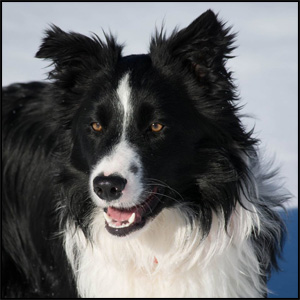
Photo: Landing Trail Stock Dogs
CLICK HERE to View Breeder Listings
Breed Profile
The Border Collie is recognized as the finest sheep-herding dog in the world. He is very intelligent and highly trainable. Alert and eager, he displays a single-mindedness for the task at hand. He is affectionate with friends but may be reserved toward strangers.
Today, Border Collies are still seen working on farms and in sheep herding trials; however, they are also one of the most popular breeds participating in many dog sports, such as flyball, agility, and frisbee to name a few. This is a breed that excels in many jobs, including Hearing Dog and Search and Rescue Dog. He is swift, agile, tireless, and has an incredible desire to work. His high-energy nature requires both mental and physical stimulation.
The Border Collie’s coat may be rough (long coat), semi-rough, or smooth (short haired). Typically, the coat colour is black & white, but colours vary and include: red & white, tri-colours (brown, black & white), liver, blue merle, red merle, yellow or white with small amounts of brown, black or red. Eye colour ranges from amber to dark brown and sometimes blue. Bone structure also varies from lightweight to heavy-boned.
When herding, the Border Collie assumes a pose with the head and forelegs lowered, eyes intense, tail down with the bottom third of the tail upturned. The Border Collie can become focused on any moving object, including very tiny insects. Known as “heading” or “gathering” herders (as opposed to “heelers”), the Border Collie’s instinct is to run wide around a herd, gather the animals, and return them to the shepherd. Every movement from the livestock is seen and reacted to accordingly.
While a well trained Border Collie can be a wonderful companion, it should be kept in mind that these dogs are primarily working dogs. If you are new to the Border Collie breed, it is strongly recommended that you do your homework — Learn about the breed before you choose to adopt a Border Collie into your home, be sure that this is the right dog for you, and that he/she will fit into your lifestyle.
A Brief History of the Border Collie
The Border Collie breed was established approximately 100 years ago and originated in the countryside bordering Scotland and England. Through selective breeding, the Border Collie developed into a breed well recognized for his intensity, energy and trainability as well as his ability to work long days and on rugged terrain. Said to have an uncanny ability to reason and incredible instinct, the Border Collie has become the world’s premier sheep herding dog and is still used worldwide in this capacity. From the beginning, the Border Collie was a true working animal and, today, the breed is still bred for his working ability rather than type. The Border Collie is one of a small number of breeds who is primarily exhibited in events that test these abilities, through herding and obedience trials for example, and is rarely exhibited in conformation shows.
Additional Reading:
Health Issues
Border Collies are generally a hardy breed; however, like all breeds, they may be susceptible to certain inherited diseases as well as allergies and skin conditions. In addition, because the Border Collie is such an active breed, he can also be prone to athletic injuries, such as pulled muscles, cruciate ligament ruptures, cuts and punctures, as well as ripped toenails and footpads.
The main health concerns in the Border Collie breed include:
- Hip Dysplasia
- Osteochondrosis Dissecans (OCD)
- Eye Diseases, including Collie Eye Anomaly (CEA) — A congenital disorder where parts of the eye do not develop normally. Severity ranges from no visual impairment to blindness. According to the American Border Collie Association (ABCA), the incidence of CEA in Border Collies in North America is about 2.5%. However, the carrier rate may be as high as 25%. Since early 2005, a test administered by OptiGen has been available which can determine whether a dog is affected, a carrier, or clear. See Collie Eye Anomaly / Choroidal Hypoplasia (CEA) Test for further details.
- Epilepsy — At this time, the incidence and heritability in the Border Collie breed are unknown.
- Deafness — The Border Collie breed has a relatively high incidence of deafness.
- Ceroid Lipofuscinosis (CL)— Also known as Storage Disease — A rare, inherited disease which affects the nerve cells of the body. This disease has been diagnosed in dogs, humans, cats, sheep, goats, cattle, horses and lovebirds. In dogs, CL has been reported in many breeds, including the Border Collie. Affected dogs appear normal at birth but begin to exhibit symptoms around one to two years of age. The age of onset and severity of the disease varies among individuals but symptoms can include a decline in progressive motor control with seizures and a loss of coordination; cognitive and abnormal behaviour; and visual impairment. Affected Border Collies rarely survive beyon 26 to 28 months of aga and there is no treatment or cure at this time. For further information, see: Canine Neuronal Ceroid Lipofuscinosis — A website designed to provide basic information on canine ceroid lipofuscinosis (neuronal ceroid lipofuscinosis), and serve as a resource for those concerned with this disease: breeders, owners, veterinarians, and researchers. In addition, a DNA Test is available from OptiGen: CL Test for Neuronal Ceroid Lipofuscinosis
If you are considering the adoption of a Border Collie puppy, or any breed, it is very important to be selective in choosing a responsible and reputable breeder. Ensure that the prospective puppy’s parents have all health clearances. Breeding of any dog should not be done until after they have been proven to be free of evidence of significant hereditary diseases. (For more information on selecting a breeder, see the articles on the General Information page.)
Recommended Health Screening:
For the Border Collie, the CHICNote 1 database includes health screenings for:
- Hip Dysplasia;
- Eye examination by a board Opthamolagist, recommended annually until the age of 7;
- DNA Repository
- Listed optional screenings for the Border Collie are: Elbow Dysplasia; OFA Shoulders; Autoimmune Thyroiditis; Congenital Deafness; Congenital Cardiac Database; Collie Eye Anomaly; Neuronal Ceroid Lipofuscinosis; and Trapped Neutrophil Syndrome.
Additional Health Resources:
- Health and Genetics of Border Collies – A Breeder and Buyer’s Guide From the American Border Collie Association (ABCA)
- Osteochondrosis from the BCSA
- Canine Inherited Disorders Database — Border Collie
- Health and Nutrition — Growing section of the Canada’s Guide to Dogs website which includes information on several health and nutrition related issues.
- Canine Health Information Center (CHIC) — Providing a source of health information for owners, breeders, and scientists that will assist in breeding healthy dogs. CHIC is a centralized canine health database jointly sponsored by the AKC/Canine Health Foundation (AKC/CHF) and the Orthopedic Foundation for Animals (OFA).
- AKC Canine Health Foundation — Working towards developing scientific advances in canine health.
- OFA – Companion Animal Eye Registry (CAER)
- Orthopedic Foundation for Animals (OFA)
- Ontario Veterinary College (OVC)
- University of Pennsylvania Hip Improvement Program (PennHip)
- HealthGene — HealthGene Corporation is the leading provider of veterinary DNA diagnostic services in Canada.
- Labgenvet — Laboratory of Veterinary Genetics is a Canadian diagnostic laboratory that offers a comprehensive service of DNA tests for veterinary genetic diseases.
Breed Standards
- CKC Breed Standard
- AKC Breed Standard
- UKC Breed Standard
- The Kennel Club (U.K.) Breed Standard
- Judging Information — From the Border Collie Society of America
Additional Breed Registries
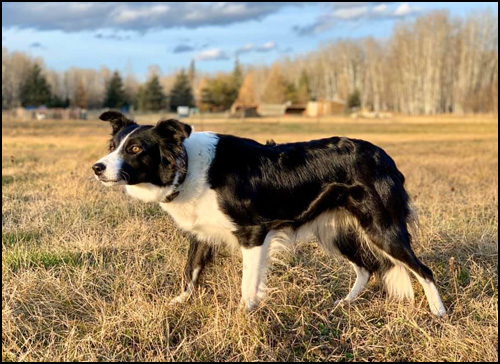
Photo: Landing Trail Stock Dogs
Grooming Information
The Border Collie’s coat is easy to maintain but regular combing and brushing will ensure the coat is kept in good condition. During shedding times, extra care is needed for the soft, thick undercoat.
- Grooming — This section of the Canada’s Guide to Dogs website includes tips, articles and information covering all aspects of dog grooming along with a listing of Groomers from across Canada.
Training Resources
The Border Collie is known to be the smartest of all the dog breeds and learns very quickly. This is, however, a dog that must have a job to do. The owner of a Border Collie needs to be prepared to spend a considerable amount of time training, playing and excersizing their dog. This is a very active breed who was bred to work and, due to his high energy level, he needs a constructive outlet to spend that energy. For the active family, the Border Collie is a great companion who excels at all kinds of dog sports and activities.
- Training — For training information, see this growing section of the Canada’s Guide to Dogs website for tips, articles, as well as listings of training centres across Canada.
Additional Information
- ISDS Border Collie Database — A database of more than ¼ million Border Collies registered by the ISDS (International Sheep Dog Society).
- All About Border Collies — Presented by the United States Border Collie Club.
- Border Collie Characteristics
- Living with Border Collies — from the United States Border Collie Club, Inc. (USBCC)
- Is a Dog from the Herding Group Right for You?
- Herding Dogs — A section of the Canada’s Guide to Dogs website which includes training and general information about Herding/Stock Dogs; listing of Stock Dog Clubs and Associations; listing of upcoming shows and events; and more.
- Clubs, Sports & Activities — For information on the many sports and activities you can get involved in with your dog.
- Working Dogs — The Working Dogs section of the Canada’s Guide to Dogs website provides information and listings of organizations that are involved in various dog jobs, such as Guide Dogs, Therapy Dogs, Police Dogs, Protection Dogs, and much more.
*NOTE 1: CHIC – The Canine Health Information Center “is a database of consolidated health screening results from multiple sources. Co-sponsored by the Orthopedic Foundation for Animals (OFA) and the American Kennel Club (AKC) Canine Health Foundation, CHIC works with parent clubs to identify health screening protocols appropriate for individual breeds. Dogs tested in accordance with the parent club established requirements, that have their results registered and made available in the public domain are issued CHIC numbers.” To learn more, visit: www.caninehealthinfo.org
*NOTE 2: The Fédération Cynologique International (FCI) is the World Canine Organization, which includes 91 members and contract partners (one member per country) that each issue their own pedigrees and train their own judges. The FCI recognizes 344 breeds, with each being the “property” of a specific country. The “owner” countries write the standards of these breeds in co-operation with the Standards and Scientific Commissions of the FCI, and the translation and updating are carried out by the FCI. The FCI is not a breed registry nor does it issue pedigrees.
Breed Listing

Quick Links
Get In Touch
- Email: canadasguidetodogs@gmail.com
- Visit us on Facebook: www.facebook.com/CanadasGuideToDogs
— CanadasGuideToDogs.com is an Amazon Associate as well as a participant in various affiliate programs, as such fees are earned from qualifying purchases.