

Cancer in Dogs
Hemangiosarcoma
A form of cancer that originates in the endothelium, which is the lining of blood vessels and spleen. These tumors are highly malignant and can be found almost anywhere in the body. The spleen, pericardium and heart are prone to be affected.
These tumors are most common in medium-sized or large breeds of middle aged or older dogs but can occur in any breed, including cross-breeds. German shepherds are reported to be more susceptible to this form of cancer than most dog breeds. The Golden Retriever also seems to have a higher than normal incidence.
Quite often there is little warning of the presence of these tumors before severe clinical signs are seen. An estimate of the average time from discovery of the tumor until death occurs in affected dogs is six to eight weeks.
The most common initial symptoms include visible bleeding, usually in the form of nosebleeds, and signs associated with blood loss, such as weakness, tiring easily, paleness to the mucous membranes of the mouth and eyes, increased respiratory rates, and abdominal swelling. In some cases, dogs just suddenly die with no clinical signs observed at all.
If a tumor in the spleen is found when it is small, it may be possible to remove the spleen or remove tumors found near the heart in order to prolong the dog’s life. However, most often these tumors have spread by the time they are identified. According to published papers, the average survival time in dogs with Hemangiosarcoma is only three to four months.
References:
- Hemangiosarcoma — Encyclopedia of Canine Veterinary Medical Information
- Hemangiosarcoma – National Canine Cancer Foundation
- Liver and Spleen Cancer (Hemangiosarcoma) in Dogs – PetMD
Histiocytosis
While Histiocytosis is quite rare in other breeds, it is inherited in the Bernese Mountain Dog and the most common type of cancer found in this breed.
There are two types of Histiocytosis: malignant and systematic. Early symptoms include depression, lethargy, loss of appetite and weight loss. In systematic Histiocytosis skin abnormalities are common on the face and limbs. If the tumor has spread to the lungs, there may be trouble breathing as well and anemia is also common. Malignant Histiocytosis progresses rapidly and has usually metastasized by the time it is diagnosed.
The mode of inheritance of Histiocytosis in the Bernese Mountain Dog is polygenic, meaning many genes are involved. Because it generally does not develop until the dog is middle-aged or older, it can be hard to identify parents that carry the trait. Conscientious efforts by all breeders and owners are needed to help eliminate it from the gene pool. Owners should report all cases to their breeder.
Additional Information:
- Histiocytic Diseases of the Bernese Mountain Dog — from The Bernese Mountain Dog Club of America, Inc.
- Histiocytosis — Canine Inherited Disorders Database
Osteosarcoma
Osteosarcoma is the most common bone tumor found in dogs, usually striking the leg bones of larger breeds. Usually seen in middle aged or elderly dogs, however, Osteosarcoma can arise in a dog of any age with larger breeds tending to develop tumors at younger ages.
Although Osteosarcoma can develop in any bone, the limbs account for 75-85% of affected bones. Developing deep within the bone and becoming progressively more painful as it grows outward and the bone is destroyed from the inside out. Over a period of one to three months, intermittent lameness can become constant. Obvious swelling is also seen as the tumor grows and normal bone is replaced by tumorous bone.
Additional Information:
- Answering your Questions about Osteosarcoma in Dogs
- Bone Cancer (Osteosarcoma) in Dogs – PetMD
- Three-Legged “Tripawd” Dogs — Read this inspiring article about dogs who have had a leg amputated and visit www.tripawds.com — an online tripod dog bone cancer resource center.

Three Legs & A Spare – a Canine Amputation Handbook — A new e-book for anyone facing amputation for their canine companion. Created by the founders of Tripawds.com, the world’s largest community for canine amputees and their humans, this interactive PDF is a comprehensive collection of the best tips and advice for a successful recovery and life on three legs. For more information, see: http://downloads.tripawds.com/2010/10/08/dog-amputation-help/
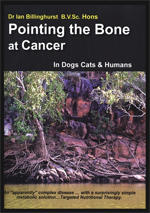
Pointing the Bone at Cancer: In Dogs, Cats & Humans
Pointing The Bone At Cancer is a book about cancer in dogs… cats and humans. It chronicles and provides a solution for a disease that is striking with increased frequency and severity. The fact that cancer thrives on what we in the west choose to eat — a sugar-rich diet lacking in protective nutrients — and way too much of it… points the way to the nutritional tools we need to defeat cancer. These nutritional tools can be used alone or combined with the current standard of care.
CLICK HERE to learn more and to purchase.
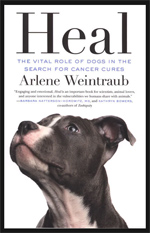
Heal: The Vital Role Of Dogs In The Search for Cancer Cures
Drawn from extensive research, on-the-ground reporting, and personal experience, this book explores the fascinating role dogs are playing in the search for cures for cancer. Learn how veterinarians and oncologists are working together to discover new treatments cutting-edge therapies designed to help both dogs and people suffering from cancer.
CLICK HERE to learn more and to purchase.
Note: This section of the Canada’s Guide to Dogs website is intended as a source of information only. It is not intended as a substitute for professional care. Always consult with your Veterinarian about health related matters.

Quick Links
Get In Touch
- Email: canadasguidetodogs@gmail.com
- Visit us on Facebook: www.facebook.com/CanadasGuideToDogs
— CanadasGuideToDogs.com is an Amazon Associate as well as a participant in various affiliate programs, as such fees are earned from qualifying purchases.