

Thai Ridgback
Origin: Thailand
Height:
– Males: 24 to 26 inches (61-66 cm)
– Females: 22 to 24 inches (58-61 cm)
Weight:
– Males: 50 to 60 lbs
– Females: 45 to 55 lbs
Also Known As: Mah Thai Lung Ahn; TRD; Thai Dog; Mah Lung Ahn; and Siamese Dog

CLICK HERE to View Breeder Listings
Breed Profile
The Thai Ridgeback is believed to have been developed in eastern Thailand and is one of the oldest breeds of stock within the dog world. Today, the breed is still very rare outside of Thailand.
Used for hunting in Thailand, the Thai Ridgeback is a very loyal and loving companion, both powerful and fearless. He is an excellent natural watchdog and family protector.
Strong, muscular, and of medium build, in many ways he resembles the Pharaoh Hound. The Thai Ridgeback’s coat is of two varieties: one being regular short hair while the other is extremely short and dense, so much so as to give the coat the appearance of being of a velvet texture. The breed comes in a variety of solid colours, ranging from shades of fawn, black, blue, and red, from head to toe and the tip of the tail. The ridge, which is formed by hair growing in the opposite direction, distinguishes this breed from all others except the Rhodesian Ridgeback. The Thai Ridgeback’s ridge unlike the Rhodesian Ridgeback’s, however, comes in a variety of shapes and sizes: the arrow shaped ridge, like that of the Rhodesian Ridgeback, as well as seven other types of large ridges. The largest ridge is known as the “Bai Pho” and covers most of the dog’s back as well as part of the hips.
The Thai Ridgeback is an extremely clean breed with little or no odour or shedding, due to its short, smooth tropical coat. As tropical dogs, however, they do not tolerate cold weather well, unless they are properly adapted to it.
Very active, agile and versatile, with excellent jumping and climbing abilities, the Thai Ridgeback excels at hunting, obedience and agility.
Health Issues
The Thai Ridgeback is a breed with very few hereditary health issues. Most health problems are from environmental elements and not from breeding. Dermoid Sinus is the main concern for the breed and can usually be determined at birth.
If you are considering the adoption of a Thai Ridgeback puppy, or any breed, it is very important to be selective in choosing a responsible and reputable breeder. Ensure that the prospective puppy’s parents have all health clearances. Breeding of any dog should not be done until after they have been proven to be free of evidence of significant hereditary diseases. (For more information on selecting a breeder, see the articles on the main General Information page.)
Additional Health Resources:
- Canine Health Information Center (CHIC) — Providing a source of health information for owners, breeders, and scientists that will assist in breeding healthy dogs. CHIC is a centralized canine health database jointly sponsored by the AKC/Canine Health Foundation (AKC/CHF) and the Orthopedic Foundation for Animals (OFA).
- Health and Nutrition — Growing section of the Canada’s Guide to Dogs website which includes information on several health and nutrition related issues.
- AKC Canine Health Foundation — Working towards developing scientific advances in canine health.
- Canine Eye Registration Foundation (CERF)
- Orthopedic Foundation for Animals (OFA)
- Ontario Veterinary College (OVC)
- University of Pennsylvania Hip Improvement Program (PennHip)
- HealthGene — HealthGene Corporation is the leading provider of veterinary DNA diagnostic services in Canada.
- Labgenvet — Laboratory of Veterinary Genetics is a Canadian diagnostic laboratory that offers a comprehensive service of DNA tests for veterinary genetic diseases.
Breed Standards
- FCI Breed Standard No. 338
- UKC Breed Standard
- Note: The Thai Ridgeback is not currently a recognized breed by the Canadian Kennel Club
- The Thai Ridgeback is accepted for recording in the American Kennel Club Foundations Stock Service Program and has been assigned to the Hound Group.
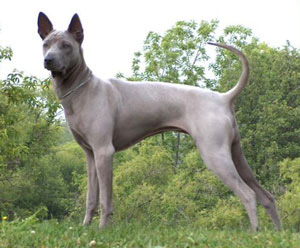
Photo credit: Urban Legends Kennel

Grooming Information
- Grooming — This section of the Canada’s Guide to Dogs website includes tips, articles and information covering all aspects of dog grooming along with a listing of Groomers from across Canada.
Training Resources
- Training — For training information, see this growing section of the Canada’s Guide to Dogs website for tips, articles, as well as listings of training centres across Canada.
Additional Information
- Clubs, Sports & Activities — For information on the many sports and activities you can get involved in with your dog.
- Working Dogs — The Working Dogs section of the Canada’s Guide to Dogs website provides information and listings of organizations that are involved in various dog jobs, such as Guide Dogs, Therapy Dogs, Police Dogs, Protection Dogs, and much more.
Breed Listing
*NOTE 1: CHIC – The Canine Health Information Center “is a database of consolidated health screening results from multiple sources. Co-sponsored by the Orthopedic Foundation for Animals (OFA) and the American Kennel Club (AKC) Canine Health Foundation, CHIC works with parent clubs to identify health screening protocols appropriate for individual breeds. Dogs tested in accordance with the parent club established requirements, that have their results registered and made available in the public domain are issued CHIC numbers.” To learn more, visit: www.caninehealthinfo.org
*NOTE 2: The Fédération Cynologique International (FCI) is the World Canine Organization, which includes 91 members and contract partners (one member per country) that each issue their own pedigrees and train their own judges. The FCI recognizes 344 breeds, with each being the “property” of a specific country. The “owner” countries write the standards of these breeds in co-operation with the Standards and Scientific Commissions of the FCI, and the translation and updating are carried out by the FCI. The FCI is not a breed registry nor does it issue pedigrees.

Quick Links
Get In Touch
- Email: canadasguidetodogs@gmail.com
- Email: info@canadasguidetodogs.com
- Visit us on Facebook: www.facebook.com/CanadasGuideToDogs
— CanadasGuideToDogs.com is an Amazon Associate as well as a participant in various affiliate programs, as such fees are earned from qualifying purchases.