

Tosa Inu
Origin: Japan
Height:
– Males: Minimum height is 23½ inches
– Females: Minimum height is 21¾ inches
Weight:
– Males: Average 140 to 150 lbs
– Females: Average 130 lbs.
Also Known As: Tosa-Ken and Tosa-Token
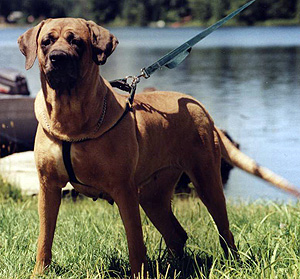
Photo credit: Pharsyd & KiyoKita Tosas
CLICK HERE to View Breeder Listings
Breed Profile
The Tosa Inu originated in Japan in the mid-19th century where he was developed as a silent, heroic dog fighter with the ability to battle to the death without complaint. Sometimes referred to as “the canine equivalent of Sumo wrestlers”, in their homeland, Tosas are treated with great honour and ceremony. In recent years, some have been exported to North America and Europe as companion and guard dogs. The breed was produced using the Shikoku-ken and combining several other breeds, including the Bulldog, Mastiff, German Pointer, and Great Dane. The breed is the largest of all the Japanese breeds and is also sometimes called the Japanese Fighting Dog and the Japanese Mastiff.
The Tosa is patient, composed, bold and courageous. Very protective of his home and family, the Tosa is generally considered excellent with children, however, due to his large size, proper supervision should be maintained at all times. He is powerful, robust and agile, generally quiet and obedient, with a calm but guarded disposition. The Tosa can be aggressive to other dogs but aggressive behaviour toward humans is uncharacteristic of the breed. It is strongly recommended that anyone considering a Tosa should have experience with large breed dogs.
The Tosa Inu gives an overall appearance of a massive, large-boned and athletic dog. He has a short, smooth coat with the preferred colour being a deep, solid red. Other colours include other shades of red, including fawn; a combination of red and black brindling; dull black; brown; black with red markings; and pied. He may also have a black mask and black tipped hairs.
Health Issues
If you are considering the adoption of a Tosa Inu puppy, or any breed, it is very important to be selective in choosing a responsible and reputable breeder. Ensure that the prospective puppy’s parents have all health clearances. Breeding of any dog should not be done until after they have been proven to be free of evidence of significant hereditary diseases. (For more information on selecting a breeder, see the articles on the main General Information page.)
Additional Health Resources:
- Canine Health Information Center (CHIC) — Providing a source of health information for owners, breeders, and scientists that will assist in breeding healthy dogs. CHIC is a centralized canine health database jointly sponsored by the AKC/Canine Health Foundation (AKC/CHF) and the Orthopedic Foundation for Animals (OFA).
- Health and Nutrition — Growing section of the Canada’s Guide to Dogs website which includes information on several health and nutrition related issues.
- AKC Canine Health Foundation — Working towards developing scientific advances in canine health.
- Canine Eye Registration Foundation (CERF)
- Orthopedic Foundation for Animals (OFA)
- Ontario Veterinary College (OVC)
- University of Pennsylvania Hip Improvement Program (PennHip)
- HealthGene — HealthGene Corporation is the leading provider of veterinary DNA diagnostic services in Canada.
- Labgenvet — Laboratory of Veterinary Genetics is a Canadian diagnostic laboratory that offers a comprehensive service of DNA tests for veterinary genetic diseases.
Breed Standards
- UKC Breed Standard for the Tosa Ken
- FCI Breed Standard No. 260
- The Tosa Inu is not currently a breed recognized by the Canadian Kennel Club
- The Tosa is accepted for recording in the American Kennel Club Foundation Stock Service Program and has been assigned to the Working Dogs Group.
Grooming Information
- Grooming — This section of the Canada’s Guide to Dogs website includes tips, articles and information covering all aspects of dog grooming along with a listing of Groomers from across Canada.
Training Resources
- Training — For training information, see this growing section of the Canada’s Guide to Dogs website for tips, articles, as well as listings of training centres across Canada.
Additional Information
- Clubs, Sports & Activities — For information on the many sports and activities you can get involved in with your dog.
- Working Dogs — The Working Dogs section of the Canada’s Guide to Dogs website provides information and listings of organizations that are involved in various dog jobs, such as Guide Dogs, Therapy Dogs, Police Dogs, Protection Dogs, and much more.
Breed Listing
*NOTE 1: CHIC – The Canine Health Information Center “is a database of consolidated health screening results from multiple sources. Co-sponsored by the Orthopedic Foundation for Animals (OFA) and the American Kennel Club (AKC) Canine Health Foundation, CHIC works with parent clubs to identify health screening protocols appropriate for individual breeds. Dogs tested in accordance with the parent club established requirements, that have their results registered and made available in the public domain are issued CHIC numbers.” To learn more, visit: www.caninehealthinfo.org
*NOTE 2: The Fédération Cynologique International (FCI) is the World Canine Organization, which includes 91 members and contract partners (one member per country) that each issue their own pedigrees and train their own judges. The FCI recognizes 344 breeds, with each being the “property” of a specific country. The “owner” countries write the standards of these breeds in co-operation with the Standards and Scientific Commissions of the FCI, and the translation and updating are carried out by the FCI. The FCI is not a breed registry nor does it issue pedigrees.

Quick Links
Get In Touch
- Email: canadasguidetodogs@gmail.com
- Email: info@canadasguidetodogs.com
- Visit us on Facebook: www.facebook.com/CanadasGuideToDogs
— CanadasGuideToDogs.com is an Amazon Associate as well as a participant in various affiliate programs, as such fees are earned from qualifying purchases.